
Acrylics vs Oils on Canvas: Which Medium Is Right for Your Painting?
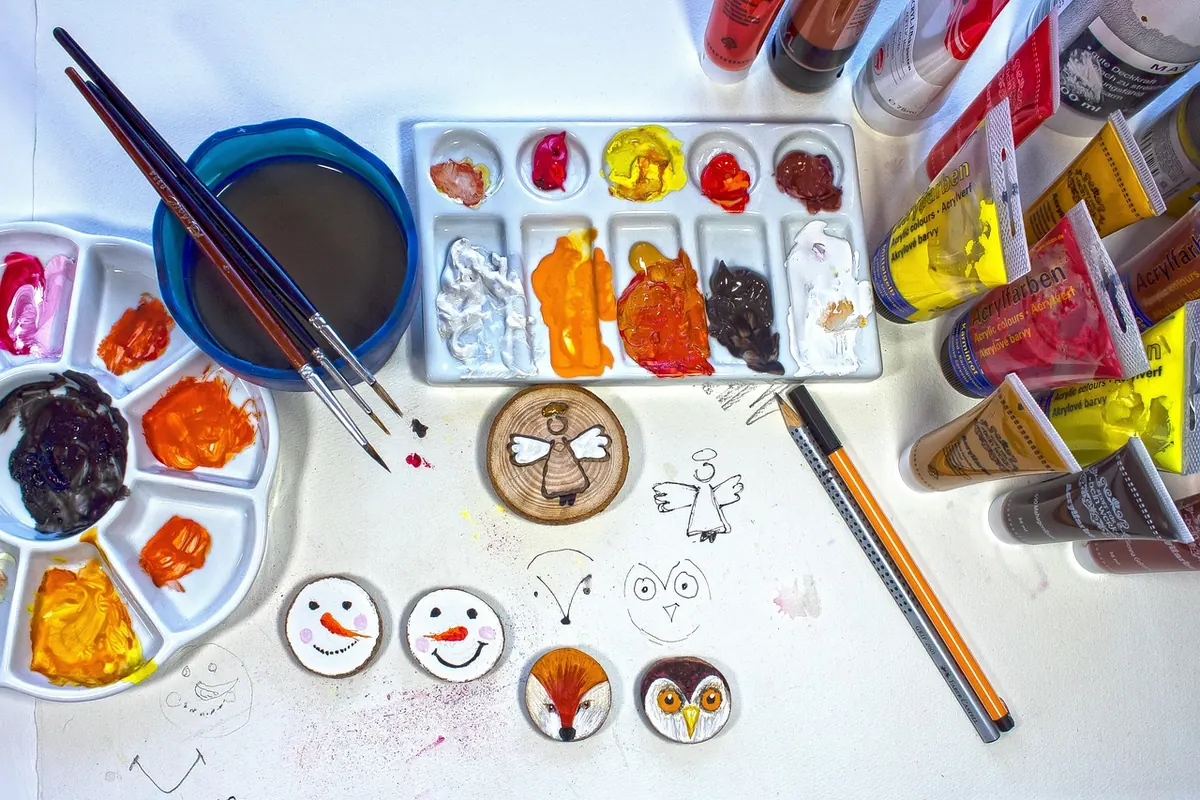
A blank canvas and two tubes of paint can leave you with a surprisingly tricky question. Acrylics and oils sit side by side on every art shop shelf, and both will happily cover a stretched canvas — but they behave in opposite ways the moment the brush leaves the palette. One dries in minutes and rinses clean under the tap; the other stays workable for days and rewards patience with depth. Neither is better. The right choice comes down to how you like to work, where you paint, and what you want the finished surface to feel like.
Drying Time Sets the Pace of Everything
Acrylics dry by evaporation. A thin wash can be touch-dry in a couple of minutes, which means you can block in shapes, tape off edges, glaze and layer almost without waiting. The catch is that thick impasto strokes may feel dry on the surface while staying soft underneath, so heavy textures need longer than they appear to. Acrylic on the palette also skins over quickly — a stay-wet palette or a light mist of water keeps it usable for an afternoon.
Oils cure by oxidation rather than evaporation, and that takes days, sometimes weeks, depending on thickness and the pigments involved. This is the medium's great gift: you can blend a soft edge, rework a passage the next morning, or wipe back a passage that has not worked. Alkyd mediums and fast-drying whites speed things up if you need them to, but the default is slow. Practical consequence: you need somewhere to store wet work. A drying rack or a shelf out of reach of sleeves and cats becomes essential.
Mixing Colour and Blending on the Canvas
Acrylics mix cleanly and stay true in the palette, but most brands dry slightly darker or duller than they look when wet. Paint a test swipe on scrap canvas before committing a large area of a mixed pink or turquoise. Gloss and matte mediums let you control sheen, and transparent glazing medium turns acrylic into something close to watercolour for layered depth.
Oils hold their wet colour, so what you mix is largely what you get. The long open time is what makes wet-in-wet skies, soft skin transitions and smoky darks possible without any medium at all. Pigment load tends to be high, which means a little goes a long way and tints stay strong. Pale colours mixed with linseed oil can yellow slightly over time, though in practice it is rarely the thing that spoils a painting.
Layering Rules Worth Knowing
Oil painters work "fat over lean": later layers carry more oil than earlier ones, so the slower-drying paint sits on top and the surface does not crack. Acrylics are far more forgiving and can be layered in almost any order once each layer is dry. If you want to combine them, an acrylic underpainting with oils on top works well, provided the acrylic is fully dry first. Acrylic over oil does not adhere reliably, so do not go that way round.
What Each Medium Costs to Run
Acrylics are usually the cheaper entry point. Student ranges are widely available, forgiving, and fine for studies; artist-quality acrylics cost more but carry more pigment, so you use less. Oils vary enormously — earth colours are affordable, while cadmiums and cobalts in artist ranges are noticeably pricier, which is one reason so many oil painters work from a limited palette.
The hidden costs differ too. Oils pull you into buying solvents, brush cleaner, extra rags and a means of disposing of all of it. Acrylics need little beyond water, soap and a jar, though synthetic brushes wear out faster with heavy texture work. In both cases, six to eight well-chosen colours will take you further than a big set of dubious ones.
Cleanup, Solvents and Studio Practicalities
Acrylic cleanup is the reason many people start here. Wash brushes in warm soapy water as soon as you finish; dried acrylic sits deep in the ferrule and ruins bristles. Never tip the rinse water down a sink if it is thick with paint — let the solids settle and bin them.
Oil brushes need a routine:
- Wipe as much paint as possible onto a rag first, so your solvent stays cleaner for longer.
- Rinse the bristles in solvent, working from the ferrule outwards.
- Follow with soap and warm water until the lather runs clear.
- Reshape the brush and dry it flat or bristles-down, never standing on its head.
Solvents are the part of oil painting worth taking seriously. Work with ventilation, keep lids on containers, avoid prolonged skin contact, and take leftover solvent to your local household waste site rather than pouring it away. If you have asthma, sensitive skin or are pregnant, speak to a doctor before setting up a solvent-based studio — and consider water-mixable oils, which clean up with soap and water and remove most of the issue.
Choosing by Subject and Style
Acrylics suit plein air sketching, bold graphic work, quick studies, textured impasto and anything that needs several layers in one sitting. They also travel well — no glass bottles, no fumes in a small room. Oils suit slow, considered work: portraits with soft edges, still life, moody interiors, anything built from thin glazes over dry layers, or a sky you want to keep pushing around for hours.
A Five-Minute Test Before You Commit
- Buy one small canvas board in each medium, or borrow from a friend.
- Paint the same simple subject twice — a mug, a lemon, a doorway — in a single sitting each.
- Notice which one you fought and which one you enjoyed.
- Keep the study you preferred on the wall for a week. Which surface still pleases you?
Start With One, Keep the Other Close
Pick a single medium and give it a month with a limited palette and one canvas size. That constraint teaches faster than swapping back and forth. Acrylics will make you decisive and teach you to plan layers; oils will teach you patience and how to handle an edge properly. If you genuinely cannot choose, use acrylics to lay in your drawing and base tones, let them dry, then finish in oils — a working method plenty of painters use, and one that lets each medium do what it is best at.
Photo: stux / Pixabay