
Where to Find Canvas Art Inspiration in the UK: Galleries, Coast and Countryside
The blank canvas rarely gets solved at the easel. Most paintings come together long before the first mark — on a wet beach in Northumberland, in a room full of Victorian landscapes, or halfway through a conversation with another painter about why a sky looks wrong.
If you are stuck for something to paint, the answer is usually to go and look at something properly. Here are the places in the UK that tend to do the job, and a few habits that turn a day out into a usable idea.
Start with the galleries on your doorstep
National institutions get the attention, but regional galleries are often better for a working painter. One room at the Walker Art Gallery in Liverpool, the Laing in Newcastle or Bristol Museum & Art Gallery will show you how a horizon was placed, how a grey was warmed up, how a foreground was kept quiet so the sky could speak. Smaller house museums and National Trust properties are useful too, because you see finished work in the kind of rooms it was made for.
Go with a purpose and a pencil. A phone is fine for reference, but a pencil forces decisions.
A gallery visit that actually pays off
- Choose one room, not the whole building.
- Pick two paintings and stand with each for five minutes before you read the label.
- Block the composition in five lines. No shading, no detail.
- Write three words for the colour. Chalky, warm, bruised.
- Note one thing you would borrow: an edge, a shape, the way a shadow is left unstated.
Twenty minutes of this beats two hours of drifting between rooms.
Read the coast like a painter
The British coast is the country's best teacher of tone. Wet sand and shingle reflect the sky, so the beach is rarely the darkest thing in the picture — that is usually the cliff, the breakwater or a figure. Sea haze compresses distance: a headland two miles away should be softer, lighter and cooler than the rocks at your feet, with far less contrast. Get that wrong and the whole painting flattens into a postcard.
Places worth a trip with a sketchbook: the Pembrokeshire coast path, the shingle at Aldeburgh and Dunwich in Suffolk, the dunes and enormous skies of the Northumberland coast, the coves of west Cornwall out of season, and the north Norfolk estuaries where the light shifts every ten minutes. Go with a turning tide if you can. Twice the drama, twice the sketching.
Inland: hedgerows, walls and weather
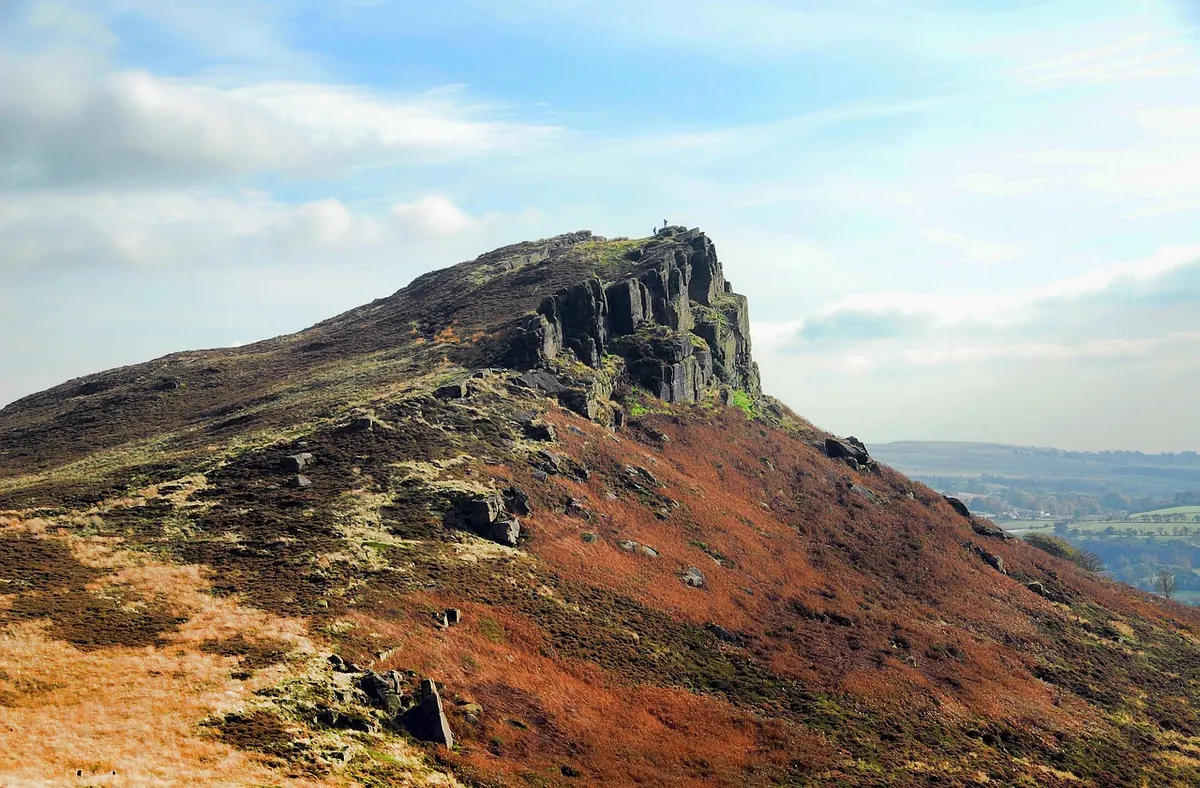
Fields are not green. They are ochre, olive, dusty grey, and the patchwork is held together by edges — drystone walls in the Peak District and the Yorkshire Dales, flint walls in Norfolk, hedges cut low across the Midlands. Paint the edges well and the fields look after themselves.
Trees matter more than hills. A single oak in silhouette against a bright sky explains more about shape than a whole valley does. In Wales and the Lake District, learn to simplify a hillside into three or four flat shapes and resist the urge to describe every rock. In East Anglia, learn to let a sky take two-thirds of the canvas without it becoming wallpaper.
Find your people, online and offline
Art communities are not just encouragement. They are a steady supply of problems to solve, and of people who will tell you honestly that your shadows are too dark.
- Art UK and the online collections of the National Gallery, Tate, the V&A and the Royal Academy hold high-resolution images of British paintings you can study at home for nothing. Zoom into a sleeve or a cloud and see how it was built.
- Local art societies and guilds usually run weekly sessions, life drawing and summer exhibitions. Most publish a programme on their website or pin one up in the local library.
- Sketching meet-ups in most cities draw a mixed crowd of abilities. An hour of drawing alongside strangers sharpens you faster than a month of scrolling.
- Painting forums and critique threads work best when you ask one specific question — is my middle distance too dark? — rather than posting a picture and hoping.
- Video demonstrations are most useful when they tackle a single problem: a wet road, a backlit tree, a white house in sunlight. Skip the two-hour epics.
Use it all with a time limit. Fifteen minutes gathering reference, then paint.
Turning a day out into a canvas
The painters who never run out of ideas are rarely the ones who travel furthest. They are the ones who go back to the same estuary, the same lane, the same stretch of moor, in every kind of weather.
- Stay within an hour of home. Repetition teaches you light and season in a way novelty never will.
- Sketch small — postcard size — so you finish before the rain does.
- Photograph each scene twice: once wide, once close on the thing that actually caught your eye.
- Write the time, the weather and two colour notes on the back of the sketch.
- Back in the studio, paint from the sketch first and the photograph second. Photographs lie about tone.
Two or three trips a month, with one finished canvas from each, will give you more material than a fortnight abroad. And if the same place keeps pulling you back, that is not a shortage of ideas. That is a subject.
Photo: Graham-H / Pixabay